
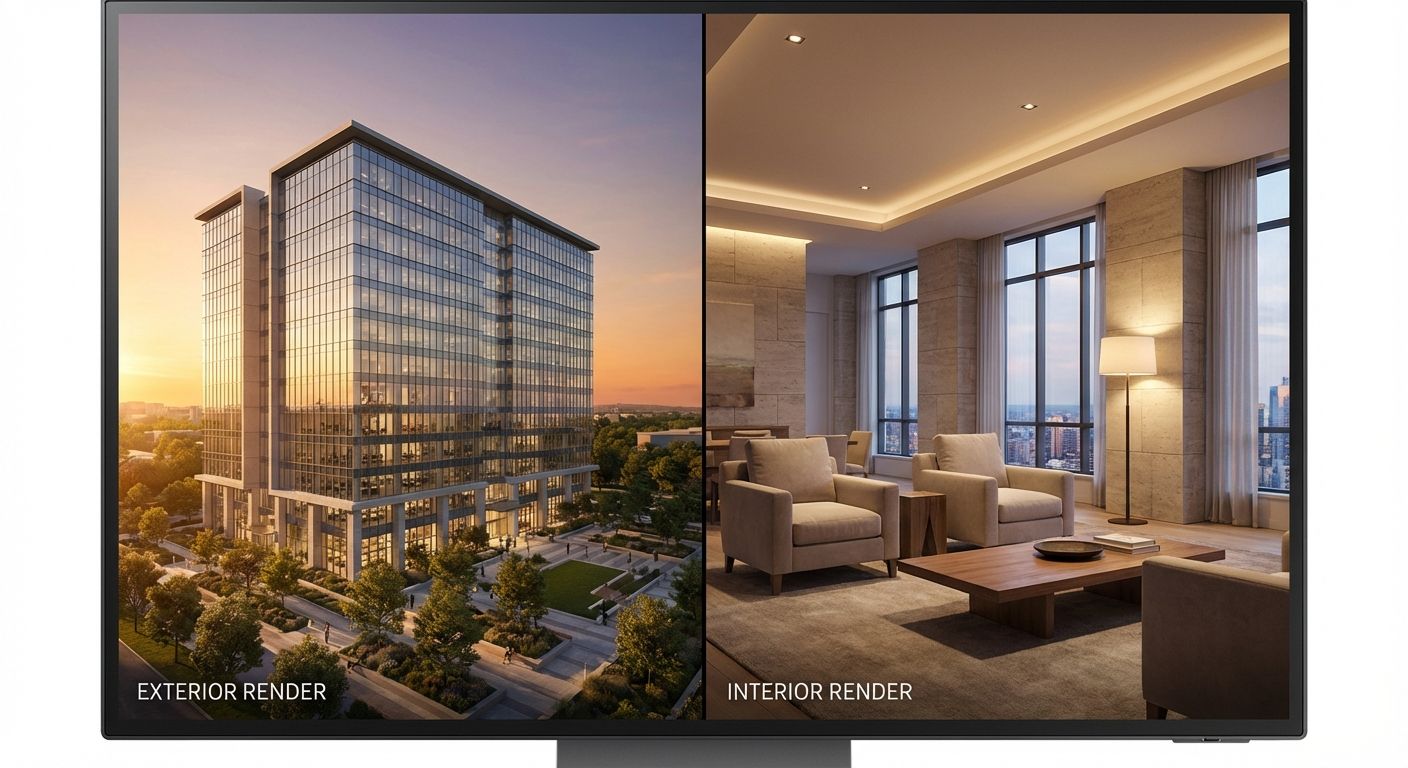
Interior vs Exterior 3D Rendering: What Architects Need to Know
When planning a 3D visualization project, one of the first decisions architects face is whether they need interior renderings, exterior renderings, or both. Each type serves different purposes and requires different approaches. This guide explains the key differences, when to use each type, and how to get the best results for your architectural projects.
What Is Exterior 3D Rendering?
Exterior 3D rendering creates photorealistic images of a building's outside appearance. These visualizations show how a structure will look within its environment, including landscaping, surrounding buildings, streets, and sky.
Common Uses for Exterior Renders
Marketing and Sales: Real estate developers use exterior renders to pre-sell properties before construction begins. A compelling street-level view can help buyers visualize their future home or investment.
Planning Applications: Many municipalities require visual representations for building permits. Exterior renders demonstrate how new construction will fit into the existing neighborhood.
Stakeholder Presentations: When presenting to investors, boards, or community groups, exterior renders provide an immediate understanding of the project's visual impact.
Competition Entries: Architecture competitions often require exterior visualizations to evaluate design proposals.
Types of Exterior Renders
Street-Level Views: Eye-level perspectives showing how the building appears to pedestrians. These are essential for retail and residential projects.
Aerial Views: Bird's-eye perspectives showing the building in relation to its surroundings. Useful for large developments and master planning.
Hero Shots: Dramatic angles designed to showcase the building's most impressive features. Often used for marketing materials.
Context Views: Renderings that emphasize how the building integrates with existing structures and landscape.
What Is Interior 3D Rendering?
Interior 3D rendering visualizes the inside spaces of a building, including rooms, furniture, lighting, materials, and decorative elements. These images help viewers understand how spaces will look and feel once completed.
Common Uses for Interior Renders
Design Development: Interior renders help architects and designers refine their concepts before construction. Clients can see material choices, furniture arrangements, and lighting effects.
Client Approvals: Getting sign-off on interior finishes is much easier when clients can see realistic visualizations rather than technical drawings.
Marketing Luxury Properties: High-end real estate relies heavily on interior renders to showcase premium finishes and lifestyle appeal.
Hospitality Design: Hotels, restaurants, and retail spaces use interior renders to convey atmosphere and brand experience.